
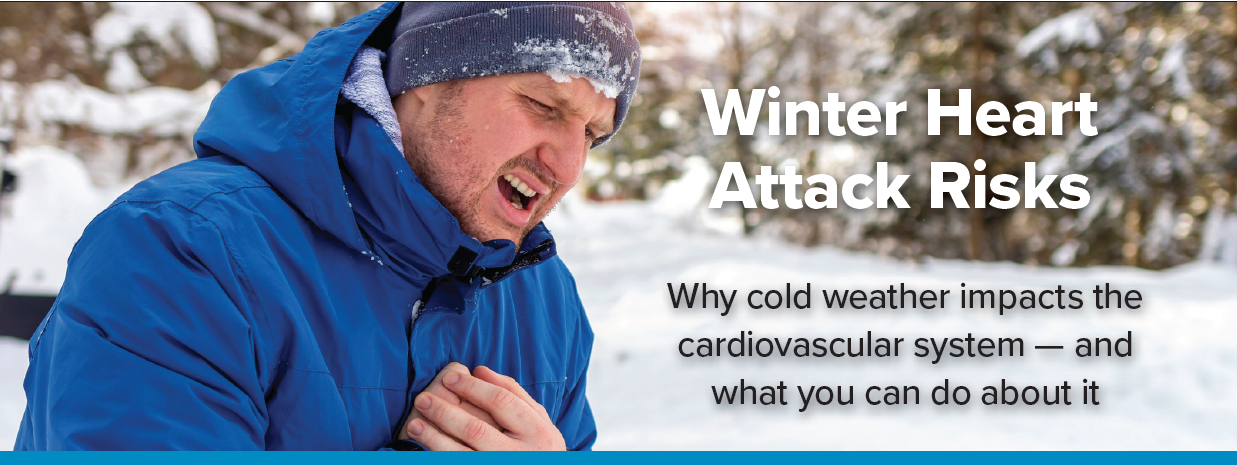
Cold weather raises the risk of heart attack for many people — especially older adults and anyone with existing heart disease or risk factors. Cold temperatures cause blood vessels to constrict, increases clotting risks, and puts extra strain on the heart. Simple precautions — dressing warmly, avoiding sudden exertion, and staying on medications — can make a big difference.
Why cold weather stresses the heart?
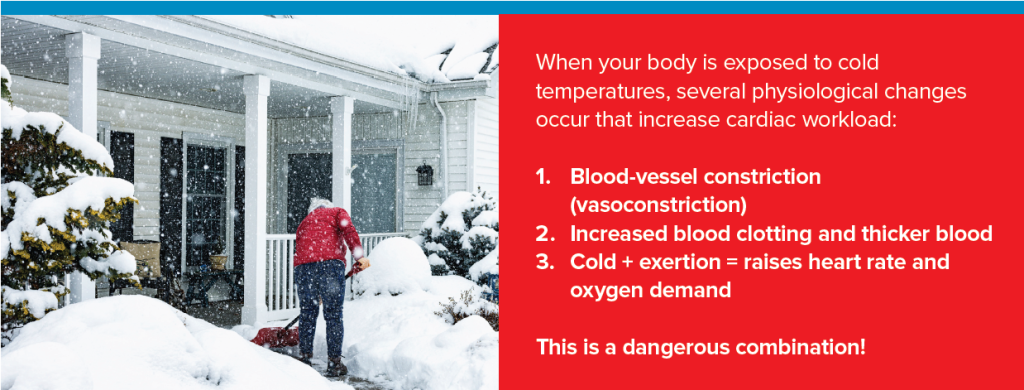
When your body is exposed to cold temperatures, several physiological changes occur that increase cardiac workload:
- Blood‑vessel constriction (vasoconstriction) – When you’re cold, your body narrows peripheral blood vessels to conserve heat and protect core temperature. That constriction increases blood pressure and makes the heart work harder to pump blood — including to the heart muscle itself. Cold-induced constriction may also reduce coronary blood flow in vulnerable arteries.[5]
- Increased blood clotting and thicker blood – Research suggests cold exposure can alter blood properties (e.g., increased red‑blood‑cell concentration, elevated fibrinogen and cholesterol), which promotes clot formation. That increases risk of a clot blocking a heart artery — triggering a heart attack.[1]
- Cold + exertion = dangerous combination — Physical exertion in cold weather — like shoveling snow or heavy winter chores — raises heart rate and oxygen demand at a time when vessels are narrow and blood is “stickier.” This can overload the cardiovascular system, especially in those with preexisting disease or risk factors.[3]
- Delayed effects after cold spells — Studies show that heart attacks and hospitalizations may increase several days after exposure to cold temperatures or a cold spell, not always immediately.[3]
Who is most at risk? - Older adults (especially 65+) – Age is a major risk factor. Cold stress, vessel constriction, and preexisting wear on arteries make older individuals more vulnerable.[2]
- People with heart disease or major risk factors– Those with coronary artery disease, previous heart attack, heart failure, high blood pressure, high cholesterol, diabetes or other chronic conditions are especially at risk in cold weather.[2]
- People exposed to cold spells or extreme low temperatures – Data collected from many countries show that extremely cold days (well below the normal comfortable range) are linked to significant increases in cardiovascular deaths — including ischemic heart disease, heart failure, arrhythmia, stroke.[2]
- Individuals doing heavy physical activity outdoors during winter – Activities like snow shoveling or strenuous chores in freezing weather pose outsized risk, even for people without known heart disease.[3]
Activities and exposures to avoid during winter
- Avoid vigorous or sudden outdoor exertion – Shoveling heavy snow is one of the most well-documented winter triggers for heart attacks. If necessary, warm up first, take frequent breaks, or ask for help.
• Avoid missing blood pressure or heart medications – Winter is a high-risk season for uncontrolled blood pressure. Stay consistent with prescriptions and plan ahead for refills.
• Avoid rapid temperature changes – Going from a warm house directly into extreme cold without protective clothing increases cardiovascular strain.
• Limit exposure to cold-weather air pollution – Winter temperature inversions can trap pollutants that increase cardiovascular events.
Practical, everyday precautions
• Dress in warm layers, including a hat, scarf, and insulated gloves.
• Cover your mouth and nose with a scarf to warm incoming air.
• Warm up slowly before outdoor chores; avoid “all at once” heavy exertion.
• Use a small, lightweight shovel if you must shovel snow.
• Keep your home comfortably heated; seek community heating assistance if needed.
• Take medications as prescribed, especially those for blood pressure, heart rhythm, and cholesterol.
• Speak with your healthcare provider about whether you should avoid strenuous outdoor chores entirely during extreme cold.
Know the warning signs — ACT FAST!
Cold weather can make symptoms appear suddenly. Call emergency services immediately if you or someone else experiences:
• Chest pain or pressure (may feel like squeezing, fullness, or heaviness)
• Shortness of breath, especially with chest discomfort
• Lightheadedness, dizziness, fainting, sudden weakness
• Sudden sweating, cold sweat
• Pain radiating to arms, jaw, neck, back, or stomach
• Unusual fatigue, nausea, or sense something “is wrong”
Prompt treatment saves heart muscle and lives.
Cold weather puts real, measurable stress on the heart — but most of the risk is preventable. With smart habits, warm clothing, and awareness, you can dramatically reduce your chances of a cold-weather heart event. If you have heart disease or multiple risk factors, talk with your healthcare provider about a personalized winter safety plan.
©2026ProgressiveHealth
References
1. Analyses of extreme-temperature effects on cardiovascular mortality worldwide. “Associations Between Extreme Temperatures and Cardiovascular Cause‑Specific Mortality: Results From 27 Countries.” (National Library of Medicine – Pub Med)
2. Meta-analysis on cold exposure and cardiovascular disease outcomes (National Library of Medicine – Pub Med)
3. Study on short-term cold exposure and heart attack hospital admissions in Sweden (2005–2019). (American College of Cardiology)
4. Hospitalization data from Beijing showing increased cardiovascular death risk in winter months. (National Library of Medicine – Pub Med)
5. Explanation of how cold leads to vasoconstriction, increased clotting, and higher cardiac risk in winter. (American Heart Association)